Soul of the City: Inside Nashville’s Beating Cultural Heart
Nashville isn’t just about country music and honky-tonks—though those are iconic. Beneath the neon lights lies a rich tapestry of cultural venues that tell the story of resilience, creativity, and Southern identity. From historic theaters to underground art spaces, I discovered a side of Music City that few tourists see. This is Nashville beyond the playlist—deep, diverse, and deeply human. While many flock to Broadway for boot-scooting and cold beer, the city’s true cultural heartbeat pulses in quieter corners: in hallowed halls where gospel once echoed, in converted post offices filled with modern masterpieces, and in dimly lit rooms where songwriters bare their souls. To know Nashville is to look past the postcard image and embrace its layered spirit—one shaped by history, education, community, and an unrelenting drive to create.
Beyond the Honky-Tonks: Rethinking Nashville’s Cultural Identity
Nashville's global reputation rests heavily on its association with country music, and rightly so. The city has long been a magnet for songwriters, performers, and music lovers drawn to its legacy of storytelling through melody. Yet reducing Nashville to its honky-tonk-lined Broadway strip does a disservice to its complex and evolving cultural fabric. Beyond the tourist-packed bars and nightly cover bands lies a city deeply committed to preserving its past while nurturing innovation in the arts. The true essence of Nashville emerges not in the commercialized performances but in the spaces where culture is lived, taught, and transformed.
This broader understanding of Nashville’s identity reveals a city shaped by more than fame and fortune. It is a place where history, race, education, and creativity converge. Cultural venues across the city serve as both archives and incubators—honoring traditions while giving voice to new generations. These institutions are not merely attractions; they are vital community anchors that reflect Nashville’s resilience, particularly through periods of social change and economic shifts. By exploring them, visitors gain insight into the values that sustain the city’s soul.
What makes Nashville unique is how seamlessly its cultural offerings blend accessibility with depth. Unlike cities where high art remains cloistered in elite institutions, Nashville invites participation. Whether attending a chamber music performance at a historic church or joining a poetry reading in a neighborhood café, locals and visitors alike are welcomed into the creative process. This inclusivity fosters a sense of ownership and pride, reinforcing the idea that culture belongs to everyone. As tourism continues to grow, maintaining this balance between popularity and authenticity becomes increasingly important.
The Ryman Auditorium: Where History Echoes Through Every Note
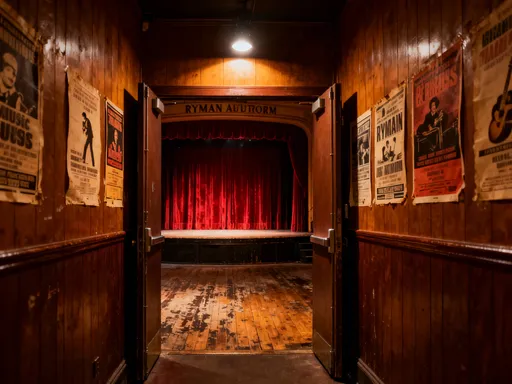
No single venue embodies the spirit of Nashville quite like the Ryman Auditorium. Known affectionately as the “Mother Church of Country Music,” this storied building began not as a concert hall but as a house of worship. Constructed in 1892 as the Union Gospel Tabernacle, the Ryman was designed to host religious revivals led by evangelist Sam Jones. Its soaring wooden pews, stained-glass windows, and vaulted ceiling were meant to inspire reverence—and they still do, though now the sermons come in the form of songs.
The transformation from church to music venue began in 1904 when the Grand Ole Opry, then a fledgling radio broadcast, moved its live shows to the Ryman. For over three decades, it served as the home of the Opry, hosting legends like Hank Williams, Patsy Cline, Johnny Cash, and Dolly Parton. The acoustics—often described as warm, intimate, and resonant—allowed every note to carry with clarity, making performances feel personal even in a space that seats over 2,000. Even after the Opry relocated in 1974, the Ryman retained its sacred status among musicians and fans alike.
Today, the Ryman is not a museum frozen in time but a living performance space that continues to host world-class artists across genres. A concert here is more than entertainment; it is an immersive experience in American musical heritage. Visitors can take guided backstage tours that reveal hidden stories—from the modest dressing rooms to the famous hole in the stage worn down by decades of foot-tapping performers. The emotional weight of standing on that stage, where so many pivotal moments in music history unfolded, is palpable.
What sets the Ryman apart is its ability to bridge generations. Young musicians often speak of playing the Ryman as a career milestone, a rite of passage that connects them to the lineage of those who came before. Meanwhile, audiences—many of whom have traveled great distances—arrive with a sense of anticipation, knowing they are about to witness something transcendent. In a city constantly evolving, the Ryman stands as a testament to endurance, reminding us that great artistry leaves echoes that never fade.
Fisk University’s Jubilee Hall and the Legacy of the Fisk Jubilee Singers
Among Nashville’s most profound cultural landmarks is Jubilee Hall at Fisk University, a historically Black university founded in 1866 to educate newly freed African Americans. The building itself—a striking Victorian Gothic structure with red-brick façade and tall arched windows—is a National Historic Landmark, but its significance goes far beyond architecture. It is a symbol of perseverance, educational excellence, and artistic triumph born out of hardship.
The heart of Jubilee Hall’s legacy lies in the story of the Fisk Jubilee Singers, a student choir formed in 1871 to raise funds for the struggling university. At a time when racial discrimination was widespread and resources for Black education were scarce, these young singers embarked on a daring international tour. They introduced spirituals—songs born out of slavery and faith—to audiences in Europe and North America, performing for dignitaries including Queen Victoria. Their success was extraordinary: they raised enough money to construct Jubilee Hall, the first permanent building for the education of African Americans in the South.
Their contribution to American music cannot be overstated. Before the Fisk Jubilee Singers, spirituals were largely unknown outside Black communities. By bringing these songs to global stages, they preserved a vital cultural tradition and laid the foundation for future genres, including gospel, blues, and jazz. Today, the Fisk Jubilee Singers continue to perform, maintaining a direct link to their origins while adapting to contemporary musical expressions. Their concerts, often held in the university’s historic Cravath Hall or during special events at Jubilee Hall, offer audiences a rare opportunity to witness living history.
For visitors, engaging with Fisk’s cultural offerings is both an educational and emotional experience. Tours of the campus often include visits to the Fisk University Galleries, which house works by Aaron Douglas, a leading figure of the Harlem Renaissance, and other significant African American artists. The university’s commitment to the arts reflects a broader truth about Nashville: that culture and education are deeply intertwined. Fisk remains a beacon of intellectual and artistic achievement, reminding the city and the nation of the enduring power of song, scholarship, and determination.
The Frist Art Museum: A Temple of Creativity in a Former Post Office
Standing proudly in downtown Nashville, the Frist Art Museum occupies a breathtaking Art Deco building that once served as the city’s main post office. Completed in 1934, the structure features limestone façades, intricate bas-relief sculptures, and a soaring central court crowned with a skylight that floods the space with natural light. When the postal operations moved out in 2001, the building was repurposed into a nonprofit visual arts center, opening its doors in 2003 as the Frist. Today, it stands as one of the Southeast’s premier destinations for rotating exhibitions of national and international significance.
Unlike traditional museums with permanent collections on display, the Frist curates a dynamic schedule of temporary exhibits, ensuring that repeat visitors always encounter something new. Past exhibitions have included retrospectives of Salvador Dalí, immersive installations by contemporary digital artists, and surveys of Southern folk art. This ever-changing lineup allows the museum to engage diverse audiences, from seasoned art connoisseurs to families exploring creativity with their children. Each exhibit is thoughtfully designed to spark dialogue, challenge perceptions, and connect local viewers with global artistic movements.
One of the Frist’s most distinctive features is its Martin ArtQuest Gallery, an interactive space where visitors of all ages can create their own artwork using a variety of mediums. From printmaking to animation, these hands-on activities demystify the creative process and encourage participation. This emphasis on accessibility aligns with the museum’s mission to make art a shared experience rather than an exclusive domain. School groups, senior centers, and community organizations regularly visit, often participating in tailored programs that deepen their engagement.
For travelers, planning a visit to the Frist requires little more than checking the current exhibition schedule and arriving during open hours. The museum recommends weekday mornings for a quieter experience, especially during popular shows. Located within walking distance of other downtown attractions, it fits seamlessly into a cultural itinerary. What makes the Frist truly special is its ability to transform a civic building into a sanctuary of imagination—a place where the past, present, and future of art coexist in harmony.
Underground Sounds: Non-Traditional Venues Shaping Nashville’s Future
While historic theaters and museums preserve Nashville’s cultural foundations, the city’s artistic future is being shaped in less conventional spaces. Across neighborhoods like East Nashville, The Nations, and Wedgewood-Houston, grassroots venues are redefining what it means to be a creative hub. These spaces—ranging from repurposed warehouses to backyard stages and pop-up galleries—prioritize authenticity, experimentation, and community connection over commercial appeal.
One such example is the listening room model, a uniquely Nashville tradition where audiences gather in intimate settings to hear songwriters perform their original work, often with stories behind the lyrics. Venues like The Bluebird Cafe and The Basement East have gained national recognition, but dozens of smaller rooms operate under the radar, offering emerging artists a platform to refine their craft. These shows are marked by silence during performances—a sign of deep respect—and lively conversation afterward, creating a sense of mutual appreciation between artist and audience.
Artist collectives also play a crucial role in this ecosystem. Groups like Fort Houston and Coop have established shared workspaces where musicians, visual artists, and makers collaborate, share resources, and host events. These collectives often organize open studio nights, live music sessions, and art markets, turning industrial areas into vibrant cultural districts. Because they operate independently of major booking agencies or corporate sponsors, they maintain creative freedom and foster a DIY ethos that attracts innovators from across the country.
What unites these underground spaces is their commitment to inclusivity and risk-taking. They welcome genres beyond country—indie rock, folk, experimental electronic, spoken word—allowing Nashville’s musical identity to expand. For visitors willing to venture beyond the guidebook, attending a show in one of these venues offers a rare glimpse into the city’s creative engine room. It’s here, away from spotlights and record deals, that the next wave of Nashville’s cultural expression is being born.
Cultural Crossroads: How Education and Community Fuel Nashville’s Arts Scene
Nashville’s thriving cultural landscape is not accidental—it is the result of decades of investment in education, public support, and community engagement. The city is home to several major universities, including Vanderbilt University, Belmont University, and Tennessee State University, all of which offer robust programs in music, theater, visual arts, and communications. These institutions serve as pipelines for talent, drawing students from across the country and feeding the local creative economy.
Belmont University, in particular, has become synonymous with music industry education. Its Mike Curb College of Entertainment & Music Business consistently ranks among the top programs in the nation, producing graduates who go on to work in recording, management, publishing, and performance. Students gain real-world experience through internships with local labels, studios, and festivals, ensuring a smooth transition from classroom to career. This integration of academia and industry strengthens Nashville’s position as a global music capital.
Community organizations also play a vital role. Groups like the Nashville Arts Coalition, ArtSpan, and the Nashville Public Library’s Creator Spaces advocate for equitable access to the arts, fund local projects, and provide resources for independent artists. Public funding through the Metropolitan Nashville Arts Commission supports murals, performances, and neighborhood-based initiatives, ensuring that culture flourishes beyond downtown. These efforts help maintain diversity in artistic expression and prevent gentrification from displacing creative voices.
Schools, too, contribute by integrating the arts into early education. Programs like Metro Nashville Public Schools’ Creative Arts Collaborative ensure that children from all backgrounds have opportunities to explore music, dance, theater, and visual arts. These formative experiences plant seeds of creativity that often grow into lifelong passions. When combined with higher education and community support, this ecosystem creates a sustainable environment where art is not a luxury but a necessity.
Traveler’s Guide: Navigating Nashville’s Cultural Landscape Like a Local
For visitors seeking a meaningful experience in Nashville, moving beyond the well-trodden path requires intention and curiosity. While a night on Broadway has its charm, a deeper connection to the city comes from exploring its neighborhoods, supporting local artists, and engaging respectfully with cultural spaces. With a little planning, travelers can craft an itinerary that balances iconic sites with hidden gems.
Start by prioritizing public transportation or rideshares, as parking in popular areas can be challenging. The WeGo Public Transit system connects key districts, and the downtown loop is free, making it easy to hop between attractions. Consider basing your stay in culturally rich neighborhoods like 12South, East Nashville, or Germantown, where boutique hotels, cafés, and independent shops create a more authentic atmosphere.
When visiting venues like the Ryman or the Frist Art Museum, book tickets in advance, especially during peak seasons. For intimate shows at listening rooms, check artist lineups online and arrive early to secure good seats. Remember that silence during performances is customary—applause comes after each song, not during. Tipping artists at small venues is appreciated, as many are independent and rely on audience support.
Explore local galleries during First Saturday Art Crawls in the Wedgewood-Houston district, where studios open their doors to the public. Visit farmers’ markets like the one at The Nations for handmade goods and live acoustic sets. And don’t overlook the city’s historic churches—many host free concerts and community events that showcase both sacred and secular music.
Most importantly, approach Nashville with openness and humility. Ask questions, listen to stories, and allow yourself to be surprised. The city rewards those who look deeper, offering experiences that linger long after the final note fades.
The Living Culture of Music City
Nashville’s cultural venues are not static relics of the past; they are dynamic, evolving spaces where history and innovation coexist. From the hallowed pews of the Ryman to the experimental stages of underground collectives, the city pulses with creative energy that is both deeply rooted and boldly forward-looking. Each institution—from Fisk University’s Jubilee Hall to the Frist Art Museum—tells a story of resilience, identity, and community.
What makes Nashville truly special is not just its output of music or art, but the way culture is woven into everyday life. It is a city where education fuels creativity, where historical memory informs present expression, and where ordinary spaces become stages for extraordinary moments. For travelers, the invitation is clear: step off the beaten path, listen closely, and engage with the people and places that give the city its soul.
In preserving its stories and amplifying new voices, Nashville demonstrates that culture is not something to be performed for tourists—it is lived, shared, and continually remade. To experience it fully is to understand that Music City’s greatest song is still being written, one note, one story, one heart at a time.