Lost in Time in Hallstatt: A Cultural Journey You Can’t Unfeel
Nestled between the serene waters of Lake Hallstatt and the towering Dachstein Alps, Hallstatt, Austria, feels less like a destination and more like a living storybook. I wandered its cobbled lanes, where every stone and timbered house whispers centuries of tradition. This isn’t just picture-postcard beauty—behind the charm lies a deep cultural soul shaped by salt, faith, and alpine resilience. What makes Hallstatt truly unforgettable isn’t just how it looks, but how it makes you feel—connected, humbled, and quietly transformed. The village does not shout; it murmurs, inviting travelers to slow down, listen, and absorb the quiet rhythm of a place where time folds in on itself.
First Impressions: Stepping Into a Dream
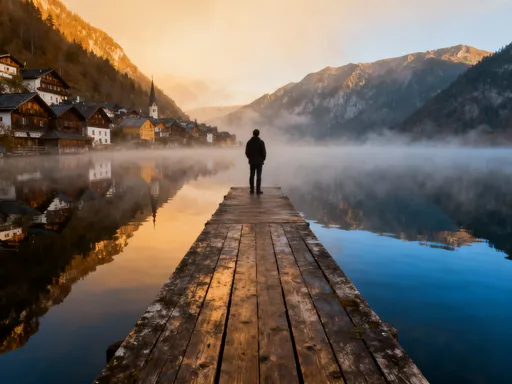
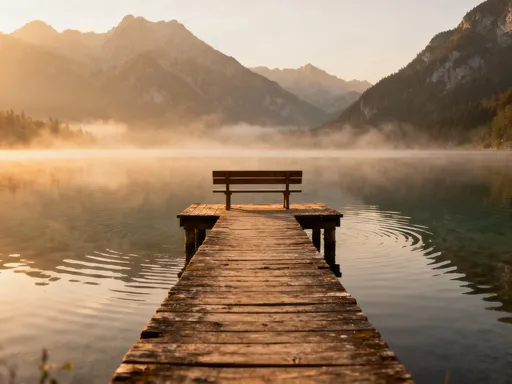
Arriving in Hallstatt is an experience suspended between reality and reverie. Most visitors arrive by ferry, gliding across the glassy surface of Lake Hallstatt as the village emerges from the morning mist like a scene painted by a Romantic-era artist. The water mirrors the steep green slopes and pastel-hued homes stacked like wooden dolls against the mountain’s edge. There is no road through the village—only footpaths and the occasional electric service vehicle—so the silence upon disembarking is immediate and profound. No car horns, no engines, just the soft lap of waves and distant church bells. This sensory shift signals something deeper: you have entered a place governed not by modern urgency, but by natural and historical rhythm.
The visual impact is undeniable, yet it is the emotional resonance that lingers. First-time visitors often pause on the dock, cameras raised, but their expressions suggest awe that borders on disbelief. Can such a place truly exist? Is it even real? The answer, of course, is yes—but Hallstatt is more than a backdrop for photographs. It is a working village with a heartbeat all its own. While tourists follow guided maps and stop for lattes at lakefront cafés, locals cycle past with grocery bags, wave to neighbors, and disappear into narrow alleys that twist like ancient roots through the settlement. The contrast between visitor and resident is subtle but telling: one group comes to witness beauty, the other lives within it, day after day.
What strikes many is how the landscape dictates life here. Houses cling to the mountainside not for aesthetic effect, but out of necessity—the flat land beside the lake is scarce, reserved for the cemetery, the church, and the oldest buildings. The terrain has shaped architecture, movement, and community patterns for over 7,000 years. This intimate relationship between land and livelihood creates a sense of belonging that visitors can only observe, never replicate. And yet, that observation itself becomes a form of connection. To walk Hallstatt’s paths is to understand, even briefly, what it means to live in harmony with nature’s limits and gifts.
The Heartbeat of Hallstatt: Life Beyond the Postcard
Beyond the camera lenses and souvenir shops, Hallstatt pulses with the quiet routines of daily life. At dawn, the bakery opens, filling the air with the warm scent of rye bread and cinnamon rolls. Fishermen check their nets along the shore, their movements practiced and unhurried. Children walk to school, their backpacks bouncing as they skip over cobblestones polished smooth by centuries of footsteps. These moments are not staged; they are simply part of a rhythm that has endured even as the world outside accelerates.
The people of Hallstatt navigate a delicate balance—welcoming guests while protecting their way of life. Many run family-owned guesthouses, craft shops, or boat rental services, their livelihoods tied to tourism. Yet there is no sense of performance. Conversations at the market stall or the post office are polite but grounded in genuine exchange, not spectacle. Locals speak German with the soft cadence of the Salzkammergut region, and while most understand English, they appreciate visitors who attempt a simple 'Guten Tag' or 'Danke'. This small gesture of respect often opens doors to warmer interactions—perhaps a recommendation for the best spot to watch sunset over the lake, or a tip about the quieter trail behind the cemetery.
Seasons shape the village’s character as much as the mountains do. In summer, the population swells with travelers arriving by the thousands, drawn by Hallstatt’s fame as a UNESCO World Heritage Site. The narrow streets buzz with footsteps, and boats crisscross the lake like water striders. But in autumn, when the linden trees turn gold and the air grows crisp, the tempo slows. Shops close earlier, and families gather for harvest meals. Winter brings snow-draped silence, when the lake sometimes freezes and the village feels like a secret once more. These cycles are not just meteorological—they are cultural, marking the ebb and flow of attention, energy, and community focus.
Living in such a celebrated place is both a privilege and a challenge. Residents take pride in their heritage, but they also guard their privacy. Some homes have signs requesting no photography, a quiet assertion of dignity in the face of constant observation. The message is clear: Hallstatt is not a museum. It is a home. To witness its beauty is a gift; to forget its humanity is a disservice.
Salt, Soul, and Centuries: The Legacy That Built Hallstatt
To understand Hallstatt is to descend—literally and metaphorically—into its depths. For over 3,000 years, salt has been the lifeblood of this village. Long before photography or tourism, it was salt that drew people here, that sustained them, and that earned Hallstatt its place in history. The region’s underground salt deposits, formed during the evaporation of an ancient sea, became the foundation of Europe’s earliest industrial activity. Miners tunneled into the mountain, using tools of bone and bronze, then iron, extracting 'white gold' that was traded as far as the Balkans and beyond.
This legacy is preserved in the Salzwelten Hallstatt, the salt mine that welcomes visitors with both education and immersion. The experience begins with a steep wooden slide—a replica of the chutes miners once used—and continues through dimly lit tunnels carved by hand. Along the way, guides share stories of the miners’ lives: the dangers they faced, the rituals they kept, the families who waited above ground. One striking detail is the preservation of ancient footsteps and handprints in the salt walls—real imprints left by workers over 2,500 years ago. To place your hand beside one is to touch time itself, a moment of silent communion across millennia.
The archaeological significance of Hallstatt cannot be overstated. The term 'Hallstatt Culture' refers to the early Iron Age period (800–450 BCE) defined by discoveries in and around the village, including weapons, tools, and burial sites. These finds revealed a sophisticated society with trade networks, social hierarchies, and spiritual beliefs. The nearby museum displays artifacts with care, from intricately decorated brooches to preserved textiles, each piece a testament to human ingenuity and endurance. What emerges is not just a story of extraction, but of civilization built on resource, labor, and belief.
Salt also shaped the village’s unique burial practices. Due to limited space and the preservative qualities of salt, bodies were buried in the cemetery for years, then exhumed. Skulls were painted with names and dates and stored in the charnel house behind St. Michael’s Chapel—a practice that might seem macabre to modern eyes but was, in fact, an act of remembrance and reverence. This tradition, still honored today, reflects a culture that does not fear the past but keeps it close, visible, and meaningful.
Faith and Folk: The Enduring Spirit of Tradition
In Hallstatt, faith is not confined to Sunday services—it is woven into the fabric of daily life and seasonal celebration. The Catholic Church has been a central presence for centuries, its influence seen in the village’s architecture, calendar, and community values. The Chapel of St. Michael, perched at the edge of the lake, is both a place of worship and a symbol of continuity. Its white walls and green dome reflect in the water, a mirror image of spiritual and natural harmony.
The charnel house adjacent to the chapel, with its rows of painted skulls, often draws the most attention. While some visitors react with discomfort, the local context transforms this space into one of dignity and memory. Each skull is marked with the person’s name and dates, sometimes adorned with floral motifs. This practice, known as *Beinhaus* tradition, was born of necessity but evolved into a cultural act of honoring ancestors. It speaks to a worldview in which death is not hidden but acknowledged, and memory is preserved with care. Guides emphasize respect, and most visitors respond with quiet contemplation rather than spectacle.
Seasonal festivals further reveal the soul of Hallstatt. One of the most beloved is the Almabtrieb, held each autumn when cattle return from their summer pastures high in the alpine meadows. The cows are adorned with elaborate wooden headdresses, flowers, and bells, their coats gleaming from months of rich grazing. As they parade through the village, families gather to cheer, children reach out to touch the animals, and farmers walk with pride. The event is more than a spectacle—it is a celebration of successful stewardship, a thanksgiving for abundance, and a reaffirmation of rural identity. Music, food, and communal meals follow, reinforcing bonds that technology cannot replicate.
Other traditions include Maypole raising, Christmas markets, and Easter processions, each rooted in a blend of Christian and folk customs. These events are not curated for tourists; they are lived experiences, passed down through generations. Participation is open, but the spirit is one of inclusion, not performance. To witness them is to understand that culture here is not a product, but a practice—one sustained by repetition, meaning, and shared belief.
Voices of the Village: Conversations With Locals
The true essence of Hallstatt is not found in guidebooks, but in conversation. During a morning boat rental, I spoke with Franz, a third-generation boatman whose family has lived in the village for over a century. 'People come for the view,' he said, adjusting the mooring line, 'but they stay because they feel something.' He spoke of how the lake changes with the light, how storms roll in from the north, and how silence returns each evening when the last ferry departs. 'We don’t own this place,' he added. 'We care for it.'
In a small ceramics studio, Maria, a potter who uses local clay, shared her journey of returning after studying in Vienna. 'I wanted to be where things grow slowly,' she said, smoothing the rim of a bowl. 'Here, everything has roots.' Her work, inspired by ancient salt vessel designs, bridges past and present. She sells to visitors, but her art is rooted in a deeper purpose: keeping tradition alive through craft, not commerce.
At the grocery store, an elderly woman gently corrected a tourist taking photos inside. 'Privat,' she said softly, pointing to the sign. There was no anger, only a quiet insistence on boundaries. Later, she offered me a sample of local cheese, smiling. This duality—hospitality paired with protection—is a recurring theme. Locals are not unfriendly; they are selective. They welcome those who come with curiosity and respect, but they resist being reduced to scenery.
What emerges from these exchanges is a collective identity built on stewardship, pride, and patience. The people of Hallstatt see themselves not as performers, but as caretakers. They understand their village’s global fame, but they measure its value in different terms: clean water, quiet mornings, the sound of children laughing in the square. Their message, spoken or unspoken, is clear: Hallstatt is not a place to conquer or consume. It is a place to receive—with humility.
The Delicate Dance: Tourism and Cultural Survival
The popularity of Hallstatt presents both opportunity and threat. In recent years, the village has grappled with overtourism, with up to 10,000 visitors arriving in a single day—ten times its resident population. The strain is visible: crowded pathways, litter in hidden corners, noise late into the evening. Recognizing the risk of becoming a 'Disneyfied' version of itself, Hallstatt has taken decisive steps to protect its integrity.
In 2019, the village introduced a permit system for tour buses, limiting their access to certain hours and routes. The main street has become a pedestrian-only zone, and large groups are guided along designated paths to minimize disruption. Signage in multiple languages requests respectful behavior: no climbing on walls, no loud talking, no drone flights. These measures are not about exclusion, but preservation. The goal is not to keep people out, but to ensure they enter with awareness.
Resident-only zones, including parts of the cemetery and private courtyards, are clearly marked. These spaces are not hidden out of secrecy, but protected out of necessity. They are where daily life unfolds—where laundry dries on lines, where elders sit in the sun, where traditions are practiced without an audience. The distinction between public and private is carefully maintained, a boundary that honors both hospitality and home.
Economically, tourism is vital. It supports families, funds preservation projects, and keeps services viable in a remote location. Yet the village leadership emphasizes quality over quantity. They seek travelers who come to understand, not just to check a box on a bucket list. Local businesses are encouraged to prioritize authenticity—offering regional food, handmade goods, and personal service—rather than mass-market souvenirs.
The lesson from Hallstatt is clear: cultural survival depends on balance. A place can be shared without being lost. But that requires intention—from policymakers, from businesses, and most importantly, from visitors. Responsible tourism is not about doing less; it is about being more present, more mindful, more respectful.
Carrying Hallstatt Home: Why This Place Stays With You
Leaving Hallstatt feels different from departing other destinations. There is no rush, no scramble for the next stop. The ferry ride back across the lake offers a final, quiet moment to reflect. The village recedes into the distance, its reflection shimmering in the water, and a question forms: not 'What did I see?' but 'What did I feel?'
For many, the answer is a sense of reconnection—to nature, to history, to the slower rhythms of human life. Hallstatt does not dazzle with grandeur; it humbles with authenticity. It reminds us that beauty is not just visual, but emotional and ethical. It challenges the modern impulse to consume experiences and instead invites us to receive them with gratitude.
The cultural depth of Hallstatt lies in its layers: the salt beneath the mountain, the footsteps in the mine, the painted skulls in the charnel house, the bells of the Almabtrieb, the quiet pride of its people. Each layer tells a story of resilience, continuity, and care. To witness this is to be changed—not dramatically, but subtly, like water shaping stone.
Travelers carry Hallstatt home in small ways: a photo on the mantel, a piece of handmade pottery, a memory of stillness by the lake. But deeper still is the internal shift—a renewed appreciation for places that live by their own time, for cultures that value preservation over profit, for communities that welcome the world without losing themselves.
So let Hallstatt be more than a destination on a map. Let it be a reminder. Seek not just sights, but stories. Travel not to take, but to understand. And when you find a place that makes you feel—truly feel—honor that feeling. Because some journeys do not end when you return. They stay with you, quietly, like a whisper from the mountains, guiding you back to what matters.